Event information
Whipple Museum, Free School Lane, Cambridge, CB2 3RH
Join us for five inspiring talks in one day. Speakers from the Department of History and Philosophy of Science will share insights from their research and expertise for the Cambridge Festival 2026.
Drop in anytime – all talks are free and will take place in the Learning Gallery at the Whipple Museum.
What's On
Linnaeus and Clouds
With Professor Staffan Mueller-Wille, 10.30am
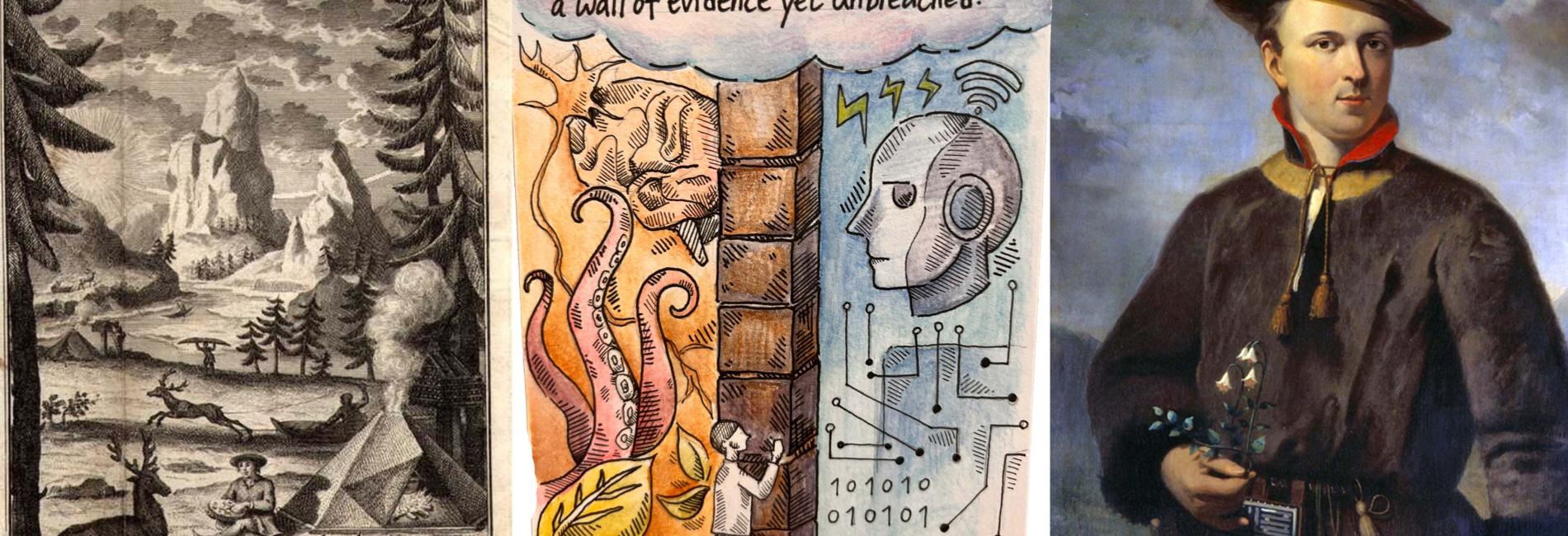
Why have scientists been eager to climb mountains? This session will look at a heated debate that took place in the small market town of Jokkmokk (Lapland) one day in July 1732, between a travelling medical student from Uppsala and the local parson and school master. It tells us a lot about why scientists climb mountains, how they establish authority from there, and why we should believe them.
Cross-cultural instruments: Chinese Sundials in the Whipple Museum and Other British Collections
With PhD researcher Zhiyu Chen, 11.30am
Did you know that the founder of the Whipple Museum of the History of Science purchased and donated four Chinese sundials? This talk will provide the first overview of similar sundials in Britain, and what we can learn about science, culture, and politics in the eighteenth and nineteenth centuries.
Conscious machines
With Teaching Associate Dr Tom McClelland, 12.30pm
The idea of machines becoming conscious is a mainstay of science-fiction. But is it starting to become science-fact? We look at the case for and against artificial consciousness and the ethical issues it raises.
Fermenting Science: Sake, Soy Sauce and the Dutch Quest for Japanese Knowledge in the Tokugawa Era
With Postdoctoral researcher Dr Maria Florutau, 2.00pm
How did Europeans learn about soy sauce, sake, and Japanese tea culture when Japan was completely closed? This talk reveals how Dutch merchants and scientists, operating from Java through the Batavian Society, became Europe's sole source of Japanese knowledge during the Tokugawa period, extracting secrets that would transform European understanding of East Asia.
Giants! A history of height, science and the Potsdam army
With PhD researcher Sandra Liwanowska, 3.00pm
Discover the remarkable story of Frederick William I’s towering soldiers—the Potsdam Giants—and how, in 18th-century Europe, kings and scientists alike measured, displayed, and experimented on extraordinary bodies. This is a tale of ambition, spectacle, and power, exploring how curiosity about human height and form shaped ideas about beauty, heredity, and what it means to be “perfect.”