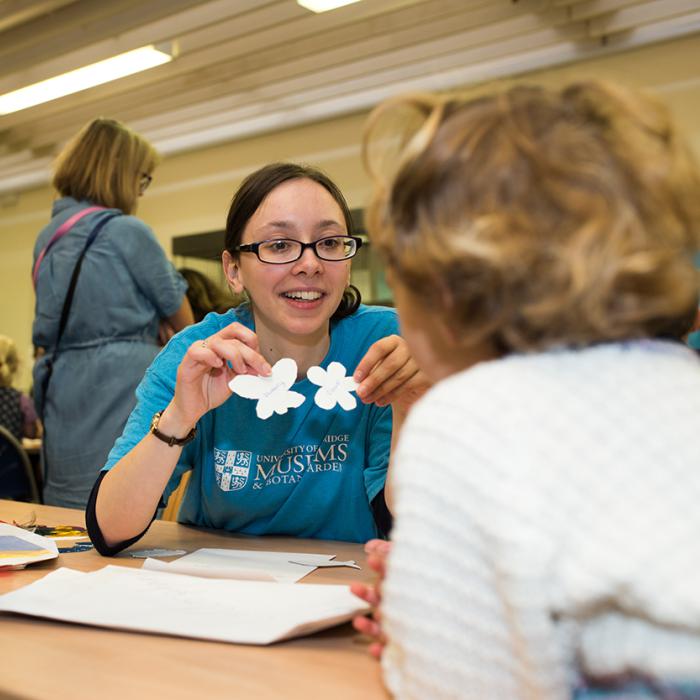
This August, come join our new polar story hour, a chance to listen to a selection of stories from the Arctic and Antarctic regions. Before Kat started at the Polar Museum, she was a primary school teacher, and she loves finding the chance to read her favourite polar books aloud. We'll also have a special object handling activity at the end to help bring the stories to life!
This August, come join our new polar story hour, a chance to listen to a selection of stories from the Arctic and Antarctic regions. Before Kat started at the Polar Museum, she was a primary school teacher, and she loves finding the chance to read her favourite polar books aloud. We'll also have a special object handling activity at the end to help bring the stories to life!
Pop in to the Polar Museum for crafts, trails and activities all based around the world's coldest places. We'll have special objects out from our handling collection and the chance to chat with our friendly staff and volunteers about what's cool according to us.
Drop in between 10am and 1pm - no need to book.
The craft will be making paper plate polar bears to take home. Chat with staff about their favourite Arctic animals and compare your hand to a polar bear paw print.
Pop in to the Polar Museum for crafts, trails and activities all based around the world's coldest places. We'll have special objects out from our handling collection and the chance to chat with our friendly staff and volunteers about what's cool according to us.
The craft will be making your own 'Polar Postcard' with torn paper landscapes.
Drop in between 10am and 1pm - no need to book.
Pop in to the Polar Museum for crafts, trails and activities all based around the world's coldest places. We'll have special objects out from our handling collection and the chance to chat with our friendly staff and volunteers about what's cool according to us.
The craft will be 'papercraft narwhals' - make a colourful narwhal with a spiral tusk to take home.
Touch a real narwhal tusk during our object handling sessions - 10.30am, 11.30am and 12.30pm.
Drop in between 10am and 1pm - no need to book.
Pop in to the Polar Museum for crafts, trails and activities all based around the world's coldest places. We'll have special objects out from our handling collection and the chance to chat with our friendly staff and volunteers about what's cool according to us.
Drop in between 10am and 1pm - no need to book.
The craft will be 'Antarctic Origami' - make a huddle of origami penguins or a cute seal to take home.
Learn about penguin eggs in our object handling session.
Have you found a fossil or interesting rock over the summer? Drop in with your finds and our Museum scientists can help you identify them.
You can also learn how to find fossils in everyday gravel, and get hands on with some of our amazing fossils and rocks.
This event is part of Summer at the Museums 2026.
Drop in to meet Earth scientists Jeannie Booth, Mengyao Du and Simon Crowhurst and explore amazing, tiny 5000-year-old fossils under powerful microscopes.
Discover what these microfossils can tell us about oceans and climates thousands of years ago. Compare the features of different microfossils and get stuck into making your own microfossil model out of clay, to take home.
This event is part of Summer at the Museums 2026.
Join us as we celebrate the pioneering 19th century palaeontologist, Mary Anning. Hear about her revolutionary fossil discoveries by ‘meeting’ Mary in person, and find out about her experience as a working-class woman scientist in the 1800s.
Investigate Mary's fossil finds with her, and find out how some of her most spectacular discoveries came to be in our Museum collection. Step back in time and have fun dressing up as Mary and her brother Joseph.
Explore real rock and fossil specimens from the Sedgwick Museum collection. Discover fossils of animals so ancient that they went extinct before dinosaurs even evolved, and investigate rocks that glow under UV light.
Chat with Museum staff about their favourite fossils and find out what it's like to work at the Sedgwick Museum.
This event is part of Summer at the Museums 2026.