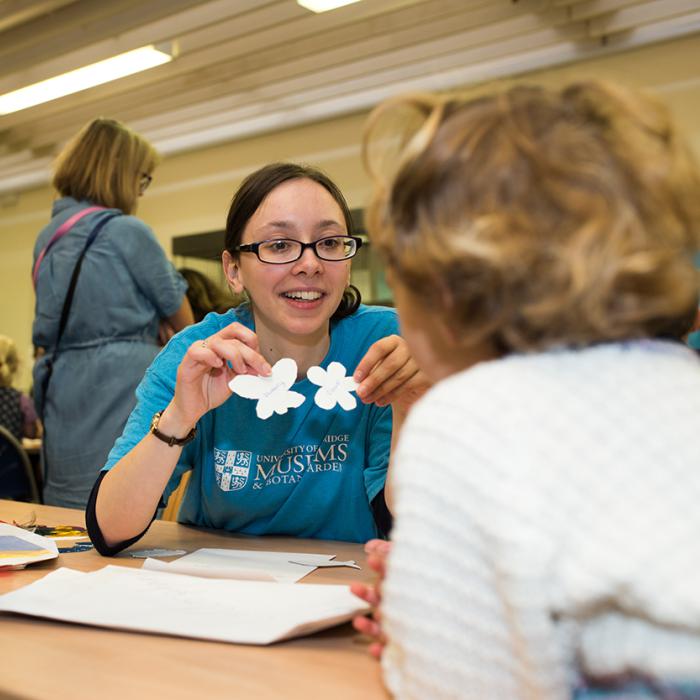
Flowers are nature’s artists. Blues, purples, yellows and reds - they come in an amazing rainbow of colours and shades.
Download this activity to find out the science behind petal colour, make your own petal paint and create a beautiful bouquet of paper flowers.
For this activity, you will need:
It’s estimated that there are about 20 million penguins in Antarctica. When it’s really cold they huddle together to keep warm. The most extreme huddle ever recorded was 19 Emperor penguins within a square metre!
Have a go at making your own penguin. All you need is some paper, and a pen for drawing on the eyes.
What does Frank need on his polar adventure? What will he eat? How will he stay warm? How will he stay cheerful?
Download our activity sheet to give him a helping hand.
A series of activities inspired by the barrel organ in our collection at the Polar Museum. Enjoy learning about music on board ship, finding out how music affects us and have a go at making some of your own.
The history of science relies on lots of amazing people - we've chosen three who are closely linked to our collections, but there are loads of great stories to discover.
Have a look at our examples and create your own posters about scientists who interest you.
In this activity, we’re making giant flowers complete with all the special parts they use to make seeds.
Download the document to find out more about how flowers work and to make your own fantastic flower.
You will need:
Check out the videos on this page to find out how you can complete a Discover Arts Award.
We're afraid we're not longer able to issue certificates as the videos suggest, but you're welcome to enjoy taking part in this activity!
A series of activities inspired by some of the diaries in our collection at the Scott Polar Research Institute.
Enjoy recording your observations during your own expeditions.
Have you ever wanted to know more about Greek pottery? This is your chance!
In this activity you will chose one of three pottery shapes to decorate inspired by Greek pottery styles. You can use pencil and paper to complete this, but you can also get creative with some coloured pencils or paints.
This resource is designed to help you Look, Think, and Do inspired by this incredible hoard of over 1800 silver and gold coins.
Some of the most amazing discoveries of objects from the past have been made by accident. This collection of coins was unearthed while workers were digging a sewage pipe on Chesterton Lane in Cambridge in 2000.