Join us online LIVE from the Museum galleries as we chat to zoology experts, show some mini- films and answer all your zoology related questions. The talk will start at 7pm on our You Tube channel here
Hope you can join us!
Artist Megan Rooney will be in-conversation with two of the book’s contributors, writer Emily LaBarge and curator Amy Tobin. The event will be followed by a drinks reception and the opportunity to visit the exhibition.
Megan Rooney: Echoes & Hours
This is the first major solo exhibition in the UK of work by Megan Rooney (b. 1985, South Africa). Her paintings have an irresistible life and energy, renewing the potential of abstraction to embody the richness of the visual world.
Megan Rooney has been working with Temitope Ajose and Leah Marojevic since 2017. Their performance-based practice oriented around movement and colour has been part of Serpentine Park Night, Kunsthalle Düsseldorf and Lyon Biennale of Contemporary Art.
Megan Rooney: Echoes & Hours
This is the first major solo exhibition in the UK of work by Megan Rooney (b. 1985, South Africa). Her paintings have an irresistible life and energy, renewing the potential of abstraction to embody the richness of the visual world.
Megan Rooney has been working with Temitope Ajose and Leah Marojevic since 2017. Their performance-based practice oriented around movement and colour has been part of Serpentine Park Night, Kunsthalle Düsseldorf and Lyon Biennale of Contemporary Art.
Megan Rooney: Echoes & Hours
This is the first major solo exhibition in the UK of work by Megan Rooney (b. 1985, South Africa). Her paintings have an irresistible life and energy, renewing the potential of abstraction to embody the richness of the visual world.
Highlights include:
🌸 A variety of free, guided Garden tours (bookable on the day).
🌸 Pop-up, family-friendly interactive plant science stalls where University researchers demonstrate some of the latest findings from the world of plant science.
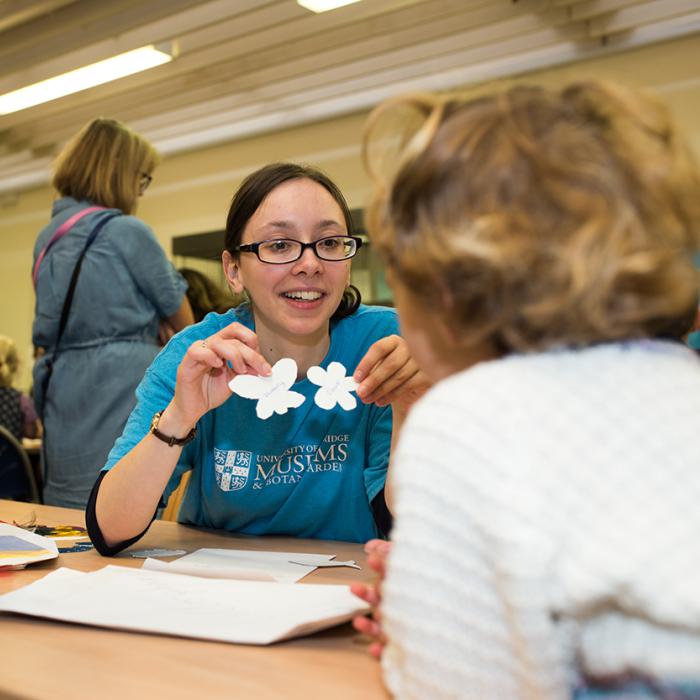
The Butterfly Effect is the culmination of an engagement project to connect young people with University of Cambridge climate scientists. It is the first time the Museum has connected past mass extinctions with the current climate crisis, in the galleries.
Why is there a fin whale skeleton in Cambridge? What can we learn from our Dodo skeleton? What did Darwin collect here and on the Voyage of the Beagle, and what can these collections tell us about him and is ideas on evolution? Hear these stories and more on a guided tour around the Museum of Zoology.
Why is there a fin whale skeleton in Cambridge? What can we learn from our Dodo skeleton? What did Darwin collect here and on the Voyage of the Beagle, and what can these collections tell us about him and is ideas on evolution? Hear these stories and more on a guided tour around the Museum of Zoology.
Tours are FREE. Please book ahead here.
Why is there a fin whale skeleton in Cambridge? What can we learn from our Dodo skeleton? What did Darwin collect here and on the Voyage of the Beagle, and what can these collections tell us about him and is ideas on evolution? Hear these stories and more on a guided tour around the Museum of Zoology.
Tours are FREE. Please book ahead here
The vocal instrumental duo of Kristýna Farag and Marwan Alsolaiman will perform a special programme created in a response to Issam Kourbaj: Urgent Archive. The audience will hear a selection of songs and pieces in intimate arrangements built on the spirit of Middle Eastern elements. The concert will bear a reminder of an ever-urgent thought: we all sprout from the same seed of life, experience crises and seek catharsis.